




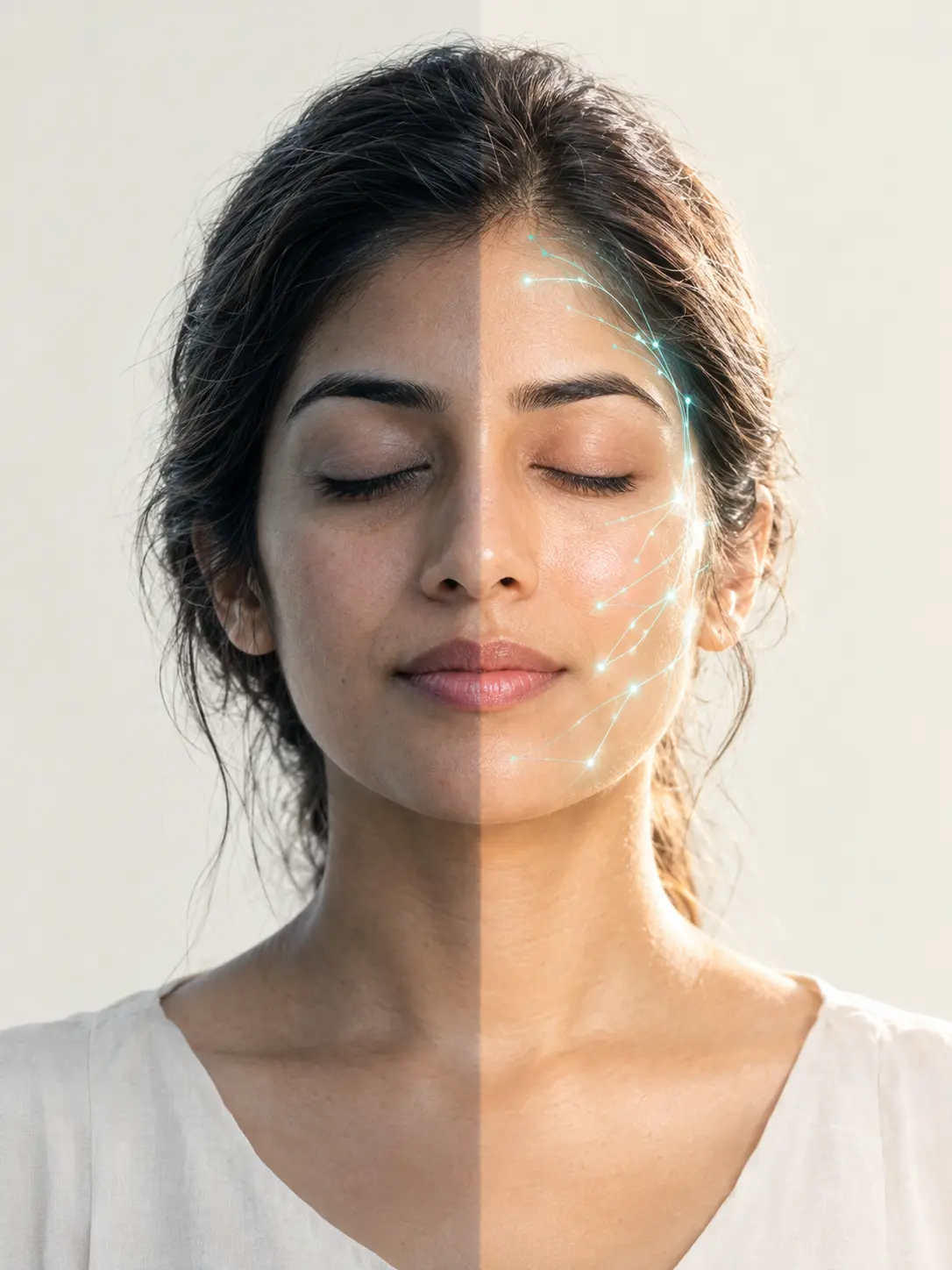
You can hide a difficult week from your calendar, but not from your face. After a stretch of deadlines, poor sleep and skipped meals, skin looks flatter. Pores seem larger. Redness lingers where it used to fade. Most people blame pollution or their moisturiser. The real answer sits deeper, in the nerve endings running through your skin.
Your skin is a nervous system organ
Skin is usually described as a barrier. That is only half the story. It is also one of the body’s largest sensory surfaces, threaded with nerve fibres that talk constantly to the brain. Keratinocytes, the cells making up most of your epidermis, carry many of the same receptors your neurons do. When your nervous system is under load, your skin is not a bystander. It is part of the conversation.
This is the territory of neurocosmetics: skincare designed to work on the nerve-to-skin signalling pathway rather than only on the surface.
“~60% of the indian work force reports fatigue & burnout, resulting to low self-esteem & confidence. This reflects on their skin”
Meet TRPV1
One receptor sits at the centre of this. TRPV1 — Transient Receptor Potential Vanilloid 1 — is an ion channel found in skin nerve fibres, keratinocytes and blood vessel cells. It is the same receptor that registers the heat of a chilli.
TRPV1 opens in response to a range of stressors: heat, UV exposure, low pH, pollutants, and the inflammatory chemistry that circulates during periods of psychological stress. When it opens, nerve endings release neuropeptides such as CGRP (calcitonin gene-related peptide) and substance P directly into the surrounding tissue.
That local release sets off a cascade:
- Blood vessels widen. This is why stressed skin flushes and stays blotchy.
- Inflammatory mediators rise. Prostaglandin E2 and cytokines such as TNF-α increase in the tissue.
- Barrier function slips. An inflamed epidermis loses water faster, and dehydrated skin scatters light unevenly — which the eye reads as dull.
- Pigment cells are provoked. Chronic low-grade inflammation stimulates melanocytes, deepening marks and unevenness.
Researchers call this neurogenic inflammation: inflammation triggered by nerves rather than by an injury or an infection. It explains why stress-affected skin so often looks inflamed without any obvious cause.
Why radiance is the first casualty
“Glow” is not a vague idea. It is a measurable optical property. Light reflects evenly off skin that is well-hydrated, with an intact barrier and a smooth surface. Inflame that surface, dehydrate it and disturb its microtexture, and light scatters instead of reflecting. The result is skin that looks tired even when nothing else about it has changed.
This is why a hard week registers on your face before it registers anywhere else in your body.
Interrupting the signal
If the trigger is neural, the intervention should be too. Research interest has moved towards ingredients that desensitise TRPV1 rather than simply hydrating the surface above it.
Cannabidiol (CBD) is one of the most studied. Applied topically, it interacts with TRPV1 and the wider endocannabinoid system present in the skin, and has been shown to reduce inflammatory signalling and support the epidermal barrier. Botanical stilbenes such as pinosylvin, found in Swiss stone pine, work through a complementary route by reducing CGRP release.
At Neuriva, this is the basis of our neurocosmetic research under HempNation — formulating encapsulated CBD so it remains bioavailable to the skin, and pairing it with actives that calm the same pathway from a different angle.
Stress will not disappear from your life. But the signal it sends to your skin can be quietened.