




Walk down any pharmacy aisle in India and the intimate hygiene shelf tells one story: cleaner is safer, and antiseptic is cleanest of all. The science tells a different story — and getting it backwards is one reason so many women find themselves treating the same infection again and again.
The ecosystem you were not told about
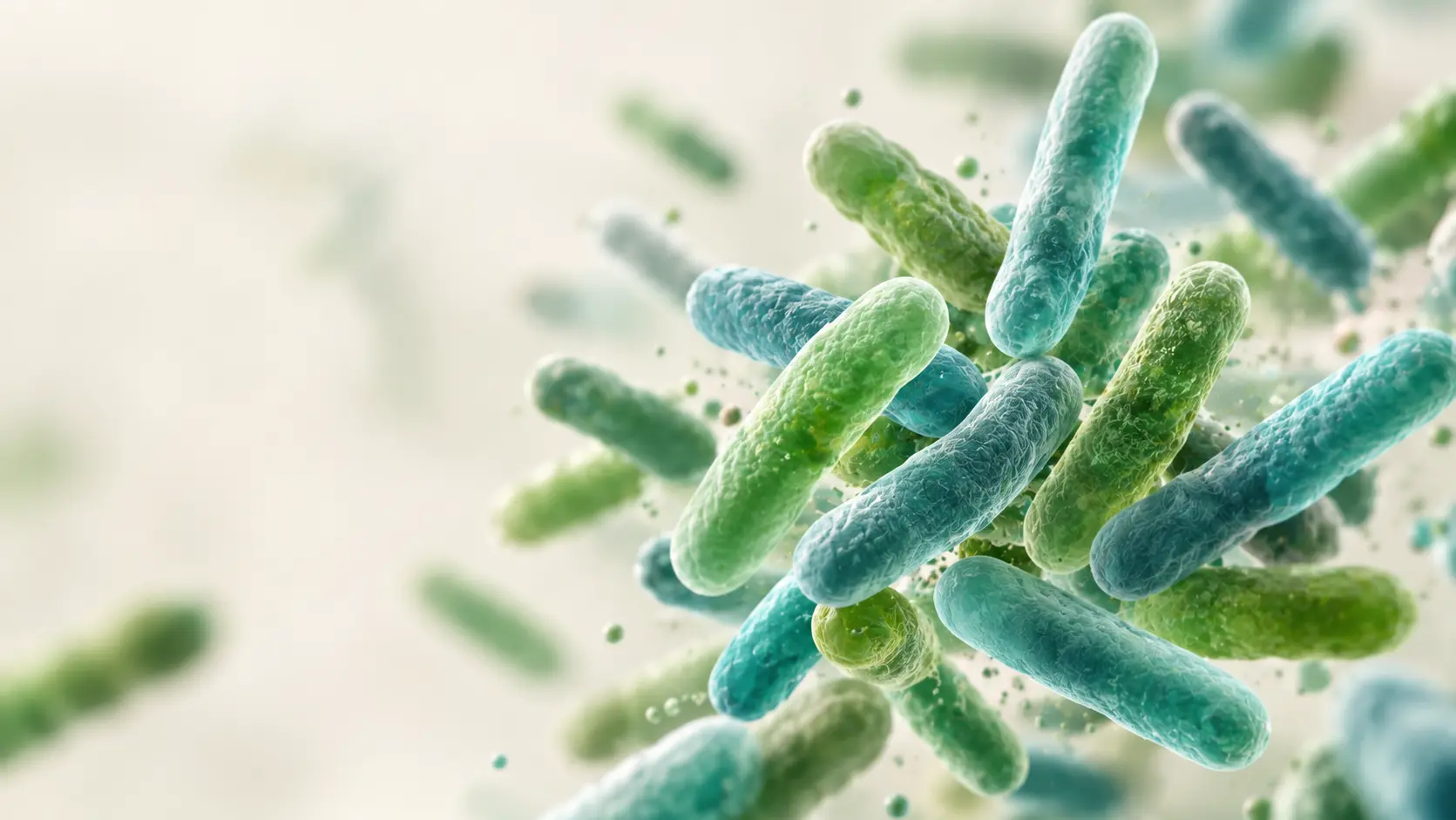
A healthy vaginal environment is not sterile. It is a dense, self-regulating microbial community, and in most healthy women it is dominated by a handful of Lactobacillus species — chiefly L. crispatus, L. gasseri, L. jensenii and L. iners.
These bacteria are not passengers. They are the defence system.
They metabolise glycogen released by vaginal epithelial cells and ferment it into lactic acid, in both its L- and D- forms. That acid holds the environment at a pH of roughly 3.8 to 4.5 — acidic enough that most uropathogens, including E. coli, Gardnerella and Candida, struggle to establish themselves.
Lactobacilli defend on several fronts at once:
- Acidification. Lactic acid is directly microbicidal against many pathogens and is now understood to be a more important protective factor than hydrogen peroxide, which earlier research emphasised.
- Competitive exclusion. They occupy the epithelial binding sites a pathogen would need.
- Bacteriocins. Antimicrobial peptides that inhibit competing species.
- Biofilm interference. They disrupt the protective films pathogens build to resist treatment.
This system evolved over millennia. It works well — until it is dismantled.
What an antiseptic wash actually does
An antiseptic does not distinguish between a pathogen and a protector. It cannot. Applied to the vulvovaginal area, a broad-spectrum antiseptic reduces the Lactobacillus population alongside everything else.
The consequences follow predictably:
- Lactic acid production falls.
- pH drifts upward, toward neutral.
- The acidic barrier that suppressed pathogens is gone.
- Opportunistic organisms — which recolonise faster than Lactobacilli do — move into the vacant niche.
The immediate sensation is cleanliness. The medium-term result is a less defended environment. Studies on vaginal douching have repeatedly associated the practice with higher rates of bacterial vaginosis rather than lower.
Many alkaline soaps do the same thing more quietly. Ordinary bar soap typically sits between pH 9 and 10. Applied regularly to an area that needs to stay near pH 4, it works against the very system protecting you.
Not all lactobacilli are equal
The four species above are usually discussed as interchangeable. The research literature is more specific, and the difference matters.
L. crispatus dominance is the most stable configuration and the one most consistently associated with low rates of bacterial vaginosis and reduced infection susceptibility. L. iners is the contrast: taxonomically a lactobacillus, but communities dominated by it shift to the diverse, low-lactobacillus state far more readily, and L. iners is frequently present during and after episodes of bacterial vaginosis rather than being displaced by them. It has an unusually small genome and appears less metabolically self-sufficient.
There is also an isomer distinction. L. crispatus produces both D- and L-lactic acid; L. iners produces essentially only the L form. Research published in mBio found the two isomers are not biologically equivalent in their effects on extracellular matrix remodelling — relevant to the integrity of the barrier protecting the upper genital tract.
So “I have lactobacilli” is not the same statement as “I have a stable protective community.” Which lactobacillus matters.
How the community feeds itself
Glycogen is the principal carbon source in this niche, and the epithelium stores it under oestrogen control. But glycogen is a large branched polymer — a bacterium cannot simply absorb it. Something has to break it down first.
A 2019 comparative genomics study in Microbiome examined human L. crispatus isolates and identified a pullulanase type I gene: an enzyme anchored to the bacterial cell surface, positioned to degrade glycogen outside the cell and take up the products. Variation in this gene across strains correlated with their ability to grow on glycogen — strains carrying deletions in the signal peptide region showed reduced growth, and one showed none.
That is a correlation across strains, which is worth stating precisely. It is a plausible mechanism for competitive dominance — food supply and chemical defence become the same process — but it has not been demonstrated that pullulanase activity is required for dominance in a living woman. The finding is useful and incomplete, and the distinction is worth preserving when you see it cited.
Because the food supply is oestrogen-dependent, the whole system is hostage to hormonal state. This is why Lactobacillus-dominant communities are characteristic of the reproductive years, largely absent before puberty, and decline after menopause — and why genitourinary syndrome of menopause, with its documented increase in urinary tract infection incidence, exists as a clinical entity.
The correct question
The useful question is not how do I kill more bacteria? It is how do I help the right bacteria win?
Globally, probiotics — introducing Lactobacilli from outside — have produced mixed results. The bacteria frequently fail to colonise and persist. The concept was sound; the delivery was not.
Our work under Safe & Sure takes the other route. Rather than adding bacteria, we feed the ones already present. The technology is a mucoadhesive system that holds selective prebiotics in place long enough for resident Lactobacilli to ferment them, produce lactic acid and reclaim dominance. The ecosystem restores itself.
What to do today
- Choose a wash formulated to an acidic pH, not an antiseptic one.
- External cleansing only. The vagina is self-cleaning; internal douching is counterproductive.
- Treat an actual infection with a diagnosis and a prescription, not a stronger wash.
Your first line of defence is already in place. The task is to stop damaging it.
What the trial evidence actually shows
Being precise about this matters, because the gap between the mechanism and the clinical results is wide.
For bacterial vaginosis, restoration works. A 2020 trial in the New England Journal of Medicine randomised 228 women to intravaginal L. crispatus CTV-05 or placebo following metronidazole. Recurrence at 12 weeks was 30% versus 45% — relative risk 0.66, 95% CI 0.44–0.87, sustained at 24 weeks.
For urinary tract infection, it has not been demonstrated. The corresponding trial of the same organism found recurrence of 15% versus 27% on placebo — but the 95% confidence interval ran from 0.2 to 1.2, crossing 1. The result was not statistically significant, despite being widely cited as though it were. A Cochrane review of probiotics for UTI prevention found no significant benefit overall (RR 0.82, 95% CI 0.60–1.12).
The most informative detail sits in that trial’s secondary analysis: among women who actually achieved high-level vaginal colonisation, recurrence was substantially reduced, with no equivalent relationship in the placebo group. Administering an organism and establishing it are different problems, and the second is where these trials appear to be failing.
This article is general information and is not medical advice.
Sources
- van der Veer C, et al. Microbiome. 2019;7:49. doi:10.1186/s40168-019-0667-9
- O’Hanlon DE, Moench TR, Cone RA. BMC Infect Dis. 2011;11:200. doi:10.1186/1471-2334-11-200
- Tachedjian G, O’Hanlon DE, Ravel J. Microbiome. 2018;6:29. doi:10.1186/s40168-018-0418-3
- Witkin SS, et al. mBio. 2013;4(4):e00460-13. doi:10.1128/mBio.00460-13
- Ravel J, et al. Proc Natl Acad Sci USA. 2011;108(Suppl 1):4680-4687
- Cohen CR, et al. N Engl J Med. 2020;382(20):1906-1915. doi:10.1056/NEJMoa1915254
- Stapleton AE, et al. Clin Infect Dis. 2011;52(10):1212-1217. doi:10.1093/cid/cir183
- Schwenger EM, Tejani AM, Loewen PS. Cochrane Database Syst Rev. 2015;(12):CD008772

