




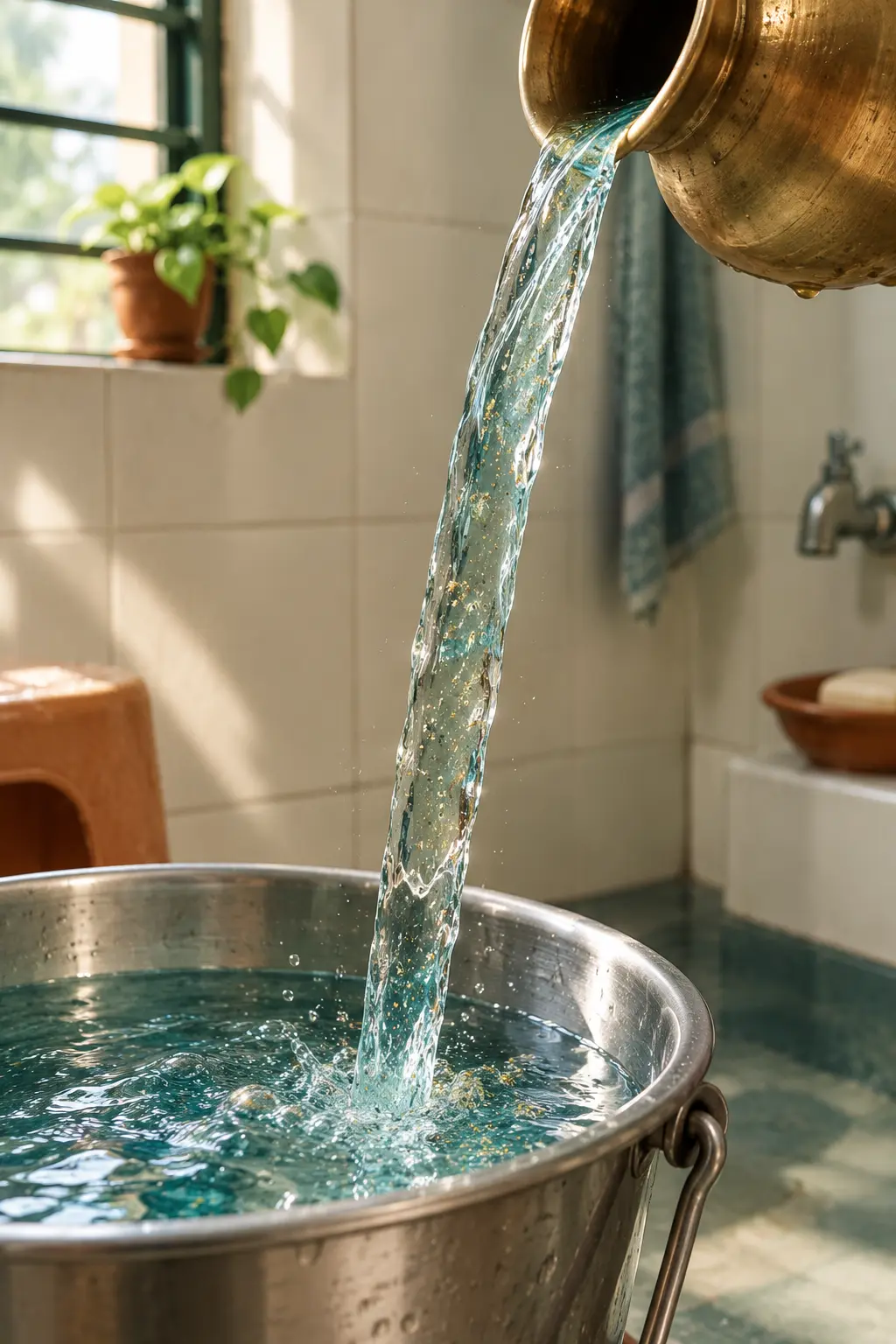
We interrogate our drinking water. We boil it, filter it, buy it in bottles, check the RO membrane. Then we wash with whatever comes out of the tap or sits in the bucket, and give it no thought at all.
For intimate hygiene, that gap in attention matters more than most people realise.
Two different standards
Households across India apply two completely different standards to the same supply. Drinking water gets filtered. Washing water does not.
The logic seems sound — you are not swallowing it. But intimate hygiene involves applying water directly to mucosal tissue that sits millimetres from the urethral opening. Mucosa is not skin. It is thinner, more permeable and far less defended.
If that water carries coliform bacteria, you have not just failed to clean the area. You have introduced pathogens to the exact place they need to be in order to ascend.
Where contamination enters
Even where a municipal supply leaves the treatment plant clean, several failure points follow:
- Intermittent supply. Most Indian cities supply water for a few hours a day. When a pipe network depressurises, groundwater and sewage can be drawn in through joints and cracks. This is the single largest contamination route in Indian distribution.
- Underground storage tanks. Frequently uncleaned for years, and often sited near drainage lines.
- Overhead tanks. Warm, poorly sealed and rarely serviced. Ideal for biofilm.
- Stored buckets. Water standing in an open bucket in a humid bathroom is a growth medium. Bacterial counts rise measurably within hours.
- The vessel itself. The mug or lota, usually washed with the same water and left damp.
One Health surveillance work across India has repeatedly detected multidrug-resistant E. coli across human, food and environmental samples — an indication of how widely these organisms circulate outside hospitals.
The direction problem
There is a second habit that compounds this. Washing from back to front — physically moving material from the perianal area towards the urethra — is one of the best-documented behavioural risk factors for urinary tract infection. E. coli, the organism behind most UTIs, is a normal gut inhabitant. It causes no trouble where it belongs. It causes a great deal where it does not.
Combine back-to-front washing with water of uncertain quality, and you have an efficient delivery mechanism for the most common uropathogen in the country.
What actually helps
- Wash front to back, always. No cost, immediate benefit.
- Use running water, not stored water, where you have the choice.
- Clean your lota or mug and let it dry rather than leaving it wet.
- Service your tanks. Underground and overhead tanks should be cleaned at least twice a year.
- Dry thoroughly with a clean towel used only by you. Residual moisture favours the wrong organisms.
- Support your own defences. Where exposure cannot be fully eliminated, a resilient, acidic, Lactobacillus-dominant microbiome is what stops an introduced pathogen from establishing.
Why we study this
Neuriva looks for leaks — points where resources and health drain away because a root cause has gone unexamined. Wash water is a textbook example. It is invisible, universal, and almost never discussed.
Our Safe & Sure research is built on a realistic premise: India’s water infrastructure will not be fixed by a hygiene product. What a product can do is strengthen the biological defence that has to work regardless.
