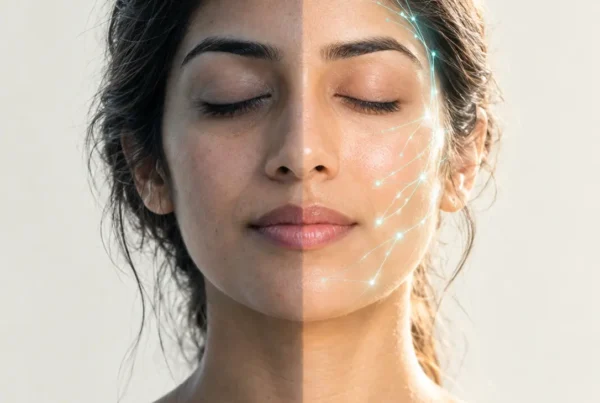




There is a distribution problem at the centre of Indian skin health. The expertise exists — India trains excellent dermatologists — but it is concentrated in a small number of cities, while the need is spread across a subcontinent.
For most people, the realistic options are a long journey, a long wait, or a guess. Usually it is the guess: a chemist’s recommendation, a relative’s advice, or a steroid cream bought over the counter that makes things considerably worse.
The gap in numbers
Estimates place India at roughly one dermatologist per 100,000 people, against several times that ratio in high-income countries. The distribution is skewed further still — a large share of practising dermatologists work in tier-one cities, while the majority of the population does not live in one.
Meanwhile the burden is substantial. Acne, eczema, fungal infection, pigmentation disorders and photodamage affect hundreds of millions of Indians. Fungal infections in particular have become markedly harder to treat, driven in part by the same over-the-counter self-medication culture that drives antibiotic resistance.
What we are building
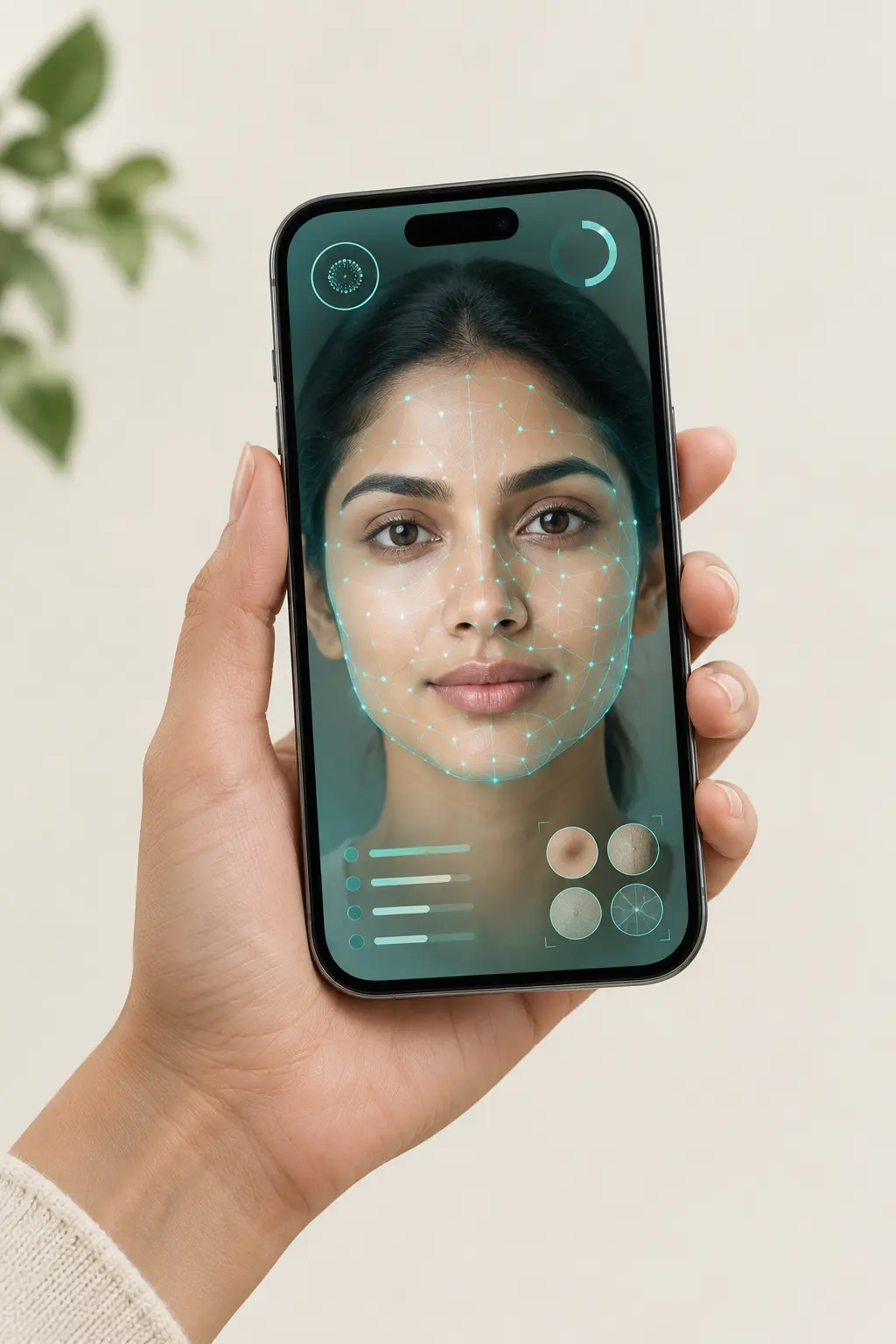
Neuriva’s skin scanner is designed to do one thing well: turn a smartphone camera into a structured skin assessment tool.
The system analyses a facial image and maps measurable parameters — surface texture, erythema (redness) distribution, pigmentation unevenness, apparent pore visibility, and indicators of barrier stress. These are real optical properties, the same ones clinical imaging systems quantify, and they can be tracked over time.
Three things make that useful:
It creates a baseline. Most people assess their skin by memory, which is unreliable. Objective measurement over weeks shows whether something is improving or not.
It is built for Indian skin. A great deal of dermatological AI has been trained predominantly on lighter skin tones and performs poorly on Fitzpatrick types IV to VI. Pigmentation disorders and post-inflammatory hyperpigmentation — among the most common concerns in India — are exactly where that failure bites hardest. Training on a representative population is not an optional refinement.
It pairs with an assistant that explains. Alongside the scanner sits an AI assistant that answers questions in plain language about ingredients, mechanisms and routines. If a consumer asks why an ingredient is in a product, they should get a real answer, not marketing copy.
The limits, stated plainly
A scanner on a phone is not a dermatologist, and we will not claim otherwise.
It does not diagnose. It cannot substitute for clinical examination, dermoscopy, a biopsy or a culture. Anything suspicious — a changing mole, an unexplained lesion, a rash that is not resolving — needs a doctor, and the system is designed to say so rather than to guess.
What it can be is the step before the doctor. A structured record instead of a vague memory. A prompt to seek help earlier instead of later. A way to understand your own skin between appointments.
The direction of travel
“A dermatologist in your pocket” is the destination, not the current state. Getting there means more data, careful validation against clinical assessment, and proper regulatory pathways for anything that moves from analysis into diagnosis.
We would rather build that slowly and honestly than ship a claim we cannot defend. That is the standard we hold across everything at Neuriva — products grounded in evidence, with limits stated as clearly as benefits.