




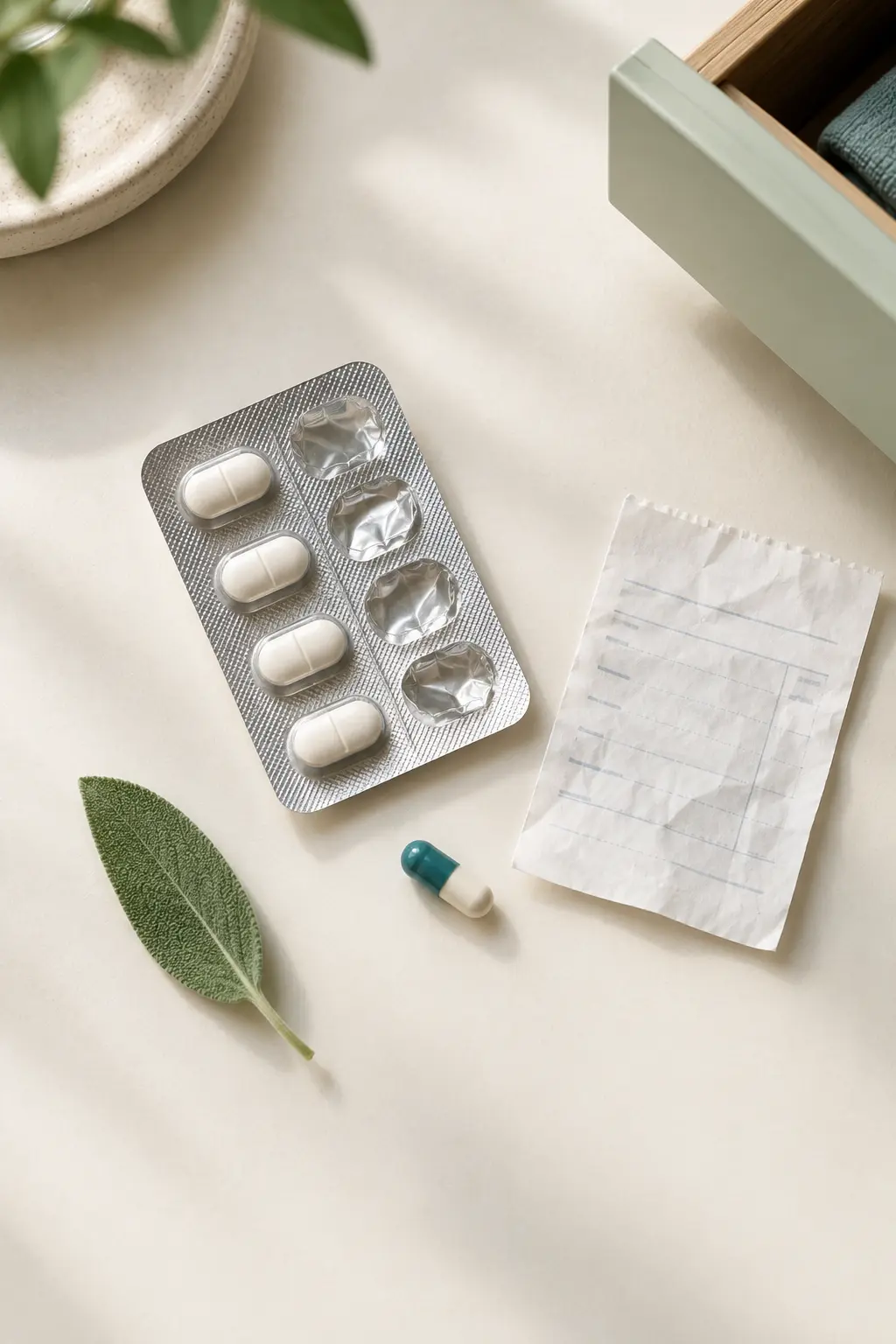
There is a strip of tablets in a drawer in most Indian homes. Half-used, from an illness some months ago, kept because throwing away medicine feels wasteful. When the next infection arrives, it comes out.
That single habit, repeated across a billion people, is one of the largest avoidable drivers of antimicrobial resistance in the country.
How common is it, really?
Research published in 2024 found that self-medication with antibiotics among adults in South-East Delhi ran at around 36%, with cold and flu symptoms and fever the most common triggers. A community survey in rural Andaman and Nicobar found that roughly two-thirds of respondents had self-medicated with antimicrobials, most often guided by a pharmacist or their own past experience.
The supply side matches the demand side. In a study using simulated patients across 261 pharmacies in Bangalore, antimicrobials were dispensed without a prescription in about two-thirds of visits, despite Schedule H rules requiring one.
The sources people name are consistent across studies: the local chemist, leftover medicines at home, and the recommendation of a friend or family member.
Why a “leftover course” causes real damage
The dose is wrong. A partial strip almost never contains a full therapeutic course. Bacteria are exposed to enough antibiotic to select for resistance, but not enough to be eliminated. The survivors are the resistant ones — and they multiply.
The drug may be wrong. The antibiotic that cleared a throat infection may have no meaningful activity against a urinary pathogen. You get the side effects and the resistance pressure without the benefit.
The diagnosis is missing. Around half of vaginal symptoms that women self-treat as thrush turn out, on testing, to be something else. Treating the wrong condition delays the right treatment, which is how a simple infection becomes an entrenched one.
The collateral damage is real. Broad-spectrum antibiotics do not target one organism. They reduce the protective Lactobacillus population as well — the exact bacteria whose dominance prevents the next infection. This is the mechanism by which treating one UTI raises the risk of the next.
What the resistance data shows
ICMR’s antimicrobial resistance surveillance has tracked a steady decline in E. coli susceptibility to first-line drugs. In its analysis of roughly 99,000 samples, commonly prescribed agents including cefotaxime, ceftazidime, ciprofloxacin and levofloxacin showed effectiveness below 20% against E. coli, while susceptibility to piperacillin-tazobactam and amikacin fell measurably between 2017 and 2023.
E. coli causes the majority of urinary tract infections in India. These are not abstract numbers. They describe the shrinking list of drugs that will work the next time a woman needs one.
Breaking the habit
- Discard leftovers. A partial strip has no legitimate use.
- Insist on a culture test for any infection that returns. A urine culture with sensitivity testing identifies the organism and the drug that will actually work.
- Complete prescribed courses. Stopping when symptoms improve is exactly the scenario that selects for resistance.
- Never pass medicines on. Your prescription encodes your diagnosis, your weight and your history.
The prevention argument
Neuriva’s position is straightforward: the most reliable way to reduce antibiotic consumption is to reduce the number of infections that require them. That is why our Safe & Sure research focuses on restoring the microbial defences that prevent recurrence, rather than on treating each episode after it arrives.